
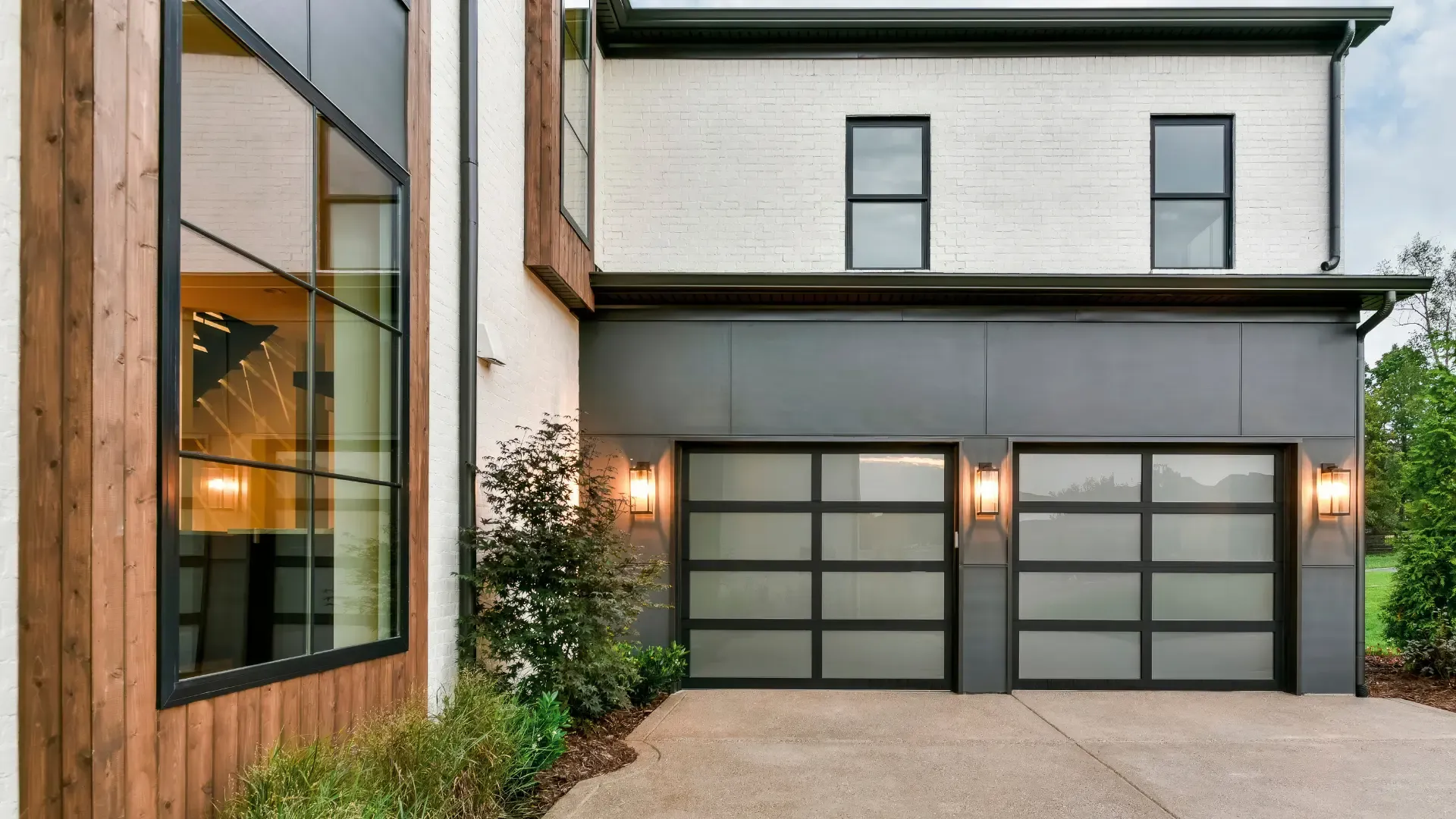
The Architect's Guide to Solving Complex Door Designs with Our ADS Supervisor
You have vision. And, your design has heart. Whether you’re aiming for a sleek, modern aesthetic or a complex, custom-fit solution, you know how you want a door system to fit into your building's design. But how do you bridge the gap between your creative concept and a functioning design? What happens when your big idea clashes with materials, mechanics, and building codes?
In this Q&A, we're partnering with an expert from our Architectural Design Support (ADS) team to answer your biggest questions about solving complex door challenges.
Whether you're in the middle of a project or planning for a future one, you're likely curious about what the design and collaboration process looks like. Our expert highlights common challenges, how to navigate them, and what it really takes to ensure your vision is realized without compromise.
Meet the Expert
 |
Ross Baran Architectural Design Support Supervisor |
Ross leads the Architectural Design Support team, ensuring you receive the highest level of design and product recommendations. His expertise is built from the ground up: he spent two years working directly in the shop manufacturing products, followed by two years in Contract Fulfillment supporting our Canadian dealer base, and two years of design in the ADS department. This rare, comprehensive background means he possesses a wide variety of product knowledge, giving him unique insight into both the build quality and practical sales application of our products. Ross leverages his expertise to ensure the team delivers solutions that guarantee your projects are designed and specified for success.
For architects who might be new to working with the Clopay ADS team, what is your core purpose, and how has that mission grown over the years?

We’re here to be a trusted partner for architects, helping you find the absolute best product for your application. Our collaboration usually begins early in the design phase, which is the best time for us to help influence your project with detailed drawings and precise specifications.
That partnership has evolved quite a bit. We originally focused primarily on coiling steel doors, but our mission has expanded to provide that same level of in-depth design assistance for sectional doors. Today, a significant part of our role is facilitating collaborative design sessions, allowing us to review plans and solve complex challenges together.
What does that collaboration process look like, and how does your team navigate the balance between creative design and function?
It all starts when an architect shares their vision with us—usually through project information, plans, and preliminary details. Our team then dives into that information to craft project-specific door detailing and custom-tailored specifications to bring your vision to life.
When it comes to balancing creativity and practicality, we have a clear philosophy: function leads, and form follows. Our top priority is to specify a product that supports the intended functionality. Once we’ve locked that in, we have a solid foundation to refine aesthetics and ensure that your final door system is a true extension of your creative intent.
Can you walk us through a recent project that really highlights the kind of complex challenges your team excels at solving?
It's one thing to build a big door; it's another to make it perform under pressure. We recently did both for a massive airplane hangar project.
The challenge was to create an insulated, 40-by-17-foot door that could also withstand significant wind load. Our engineers developed a custom solution that delivered on all fronts.
This project showcases our core strength: engineering custom solutions that meet very specific demands, regardless of scale.
If you could give just one piece of advice to an architect approaching a custom door solution for the first time, what would it be?
My single biggest piece of advice is to engage with us as early as possible. A lot of architects feel they need to have everything figured out before they reach out, but the opposite is true. We’re here to do the heavy lifting on the product side so you can focus on the overall design.
No question is too small, and no idea is too 'out there.' Bring us your challenges, your 'what-ifs,' and your most ambitious concepts. The best first step is always to reach out to the Architectural Design Support team; we’ll help you find a path forward.
Looking at the industry today, what innovations in materials or technology are you most excited about?
For us, the most exciting developments are those that expand the very definition of what a door can be. We're seeing this happen in two major areas: advancements in material science that blend beauty with durability, and integrated technologies that add a whole new layer of functionality.
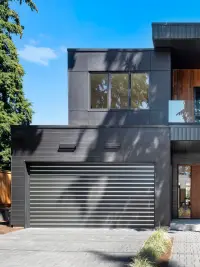
A perfect example on the materials side is the technology behind modern faux wood cladding on our residential garage doors. It's truly remarkable now—it delivers the authentic visual warmth and texture of natural wood, while freeing the architect from the long-term maintenance and weathering concerns.
Then, in technology, you have our soon-to-launch Avante® Door with C-Power™ enabled Click to Conceal™ Panels, which is a true game-changer. We debuted this new tech at the 2025 AIA Conference on Architecture and Design tradeshow. This innovation makes overhead sectional doors a dynamic design element, giving the user the ability to transition the glass from transparent to opaque on demand. This gives users incredible control over privacy, light, and ambiance. More than a simple entryway, it becomes an interactive architectural element.
How is technology, such as BIM and 3D modeling, changing the way your team collaborates with architects?
While 2D CAD has been the industry standard for decades, the shift towards 3D modeling and BIM is revolutionizing our collaboration process. It creates a much more dynamic and transparent partnership.
We're now seeing architects share full 3D virtual views of a job site, created from real-time scans. This allows us to "walk through" the space with them from anywhere, identify potential conflicts, and understand the existing conditions with a level of accuracy that 2D drawings simply can't match. It transforms the process from reactive problem-solving to proactive design, ensuring a smoother execution from start to finish.
RELATED: Architect Resources For Specifying Residential & Commercial Doors
Looking ahead, what do you see as the next big trend in door design for both residential and commercial spaces?
We're seeing exciting trends in commercial and residential door design, largely centered on maximizing space and functionality.
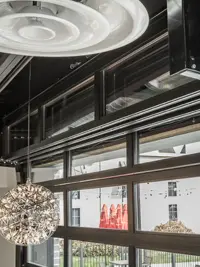 In residential design, the trend is all about blurring the lines between indoor and outdoor living. We’re integrating more full-view aluminum and glass doors, like our Avante® and VertiStack™ Avante® Doors, into modern homes. The next layer of this is giving homeowners control over that openness. Our C-Power™ Technology will be available soon. These innovative Click-to-Conceal™ Panels can switch from clear to opaque at the touch of a button, instantly transforming a space from public to private. It offers the best of both worlds: connection and privacy.
On the commercial side, the focus is on smarter space utilization. Architects and building owners want to maximize every square foot, and traditional overhead door tracks can limit design options. The solution we’re seeing take off is vertically stacking doors, particularly our commercial VertiStack™ Clear Door. These cleverly engineered sectional doors stack neatly above the opening, completely eliminating the need for horizontal tracks. This opens up the fourth wall (the ceiling), allowing for endless flexibility.
How early in the design process is the right time for an architect to engage with the ADS team?
We're ready to help at any stage of the project. But, if you want to unlock the most value and creative potential, my answer is: the earlier, the better.
When you bring us in during the initial design phase, we can offer a wider range of solutions, help integrate the door system seamlessly into your vision, and prevent potential conflicts that could lead to costly revisions down the road. Early collaboration ensures the door is an integral part of the architecture, not just an addition to it.
What is the most common misconception architects have about specifying a custom commercial door?
You don't need to come to us with a fully engineered solution—in fact, we prefer to partner with you before that stage.
Think of our ADS team as an extension of yours. Your expertise is crafting the architectural vision; ours is finding the perfect product configuration to bring it to life.
Bring us your design challenges, unique site conditions, or the aesthetic you're aiming for. Let us handle the technical product research and heavy lifting. We're here to make your job easier. Let's get started!
What are the unique challenges your team helps solve when retrofitting a modern door into a historic or existing building?
 Retrofit projects are a fascinating blend of old and new. The art is in preserving the building's character; the science is in upgrading its performance. A frequent obstacle is limited headroom, where older structures can't accommodate modern overhead doors.
Our expertise is bridging that gap. We utilize specialized low-headroom track configurations that allow for a new door to integrate into the existing architecture. It's how we deliver the best of both worlds: contemporary performance that honors the building's original character.
Looking for the perfect closure product for your next project? Our ADS team can help. Connect with us for design phase product drawings and specification writing services.