

Architect’s Technical Guide on Residential Garage Door Track Options and Measurements
For the modern home, the garage door is more than a utility; it’s a dynamic architectural feature. It shapes the exterior and reimagines the garage as an extension of the living space. But translating vision to reality hinges on technical details. A good understanding of track and clearance specifications will align your design intent with structural integrity, ensuring a future-proofed design that looks great and performs for years to come.
Think of the track system as part of your design. Imagine your client wants a full-view glass door, but the garage has low headroom. Initially, you might think, “We’ll have to pick a different door style.” But, the limitation isn't the door—it's the track. And the track can be changed.
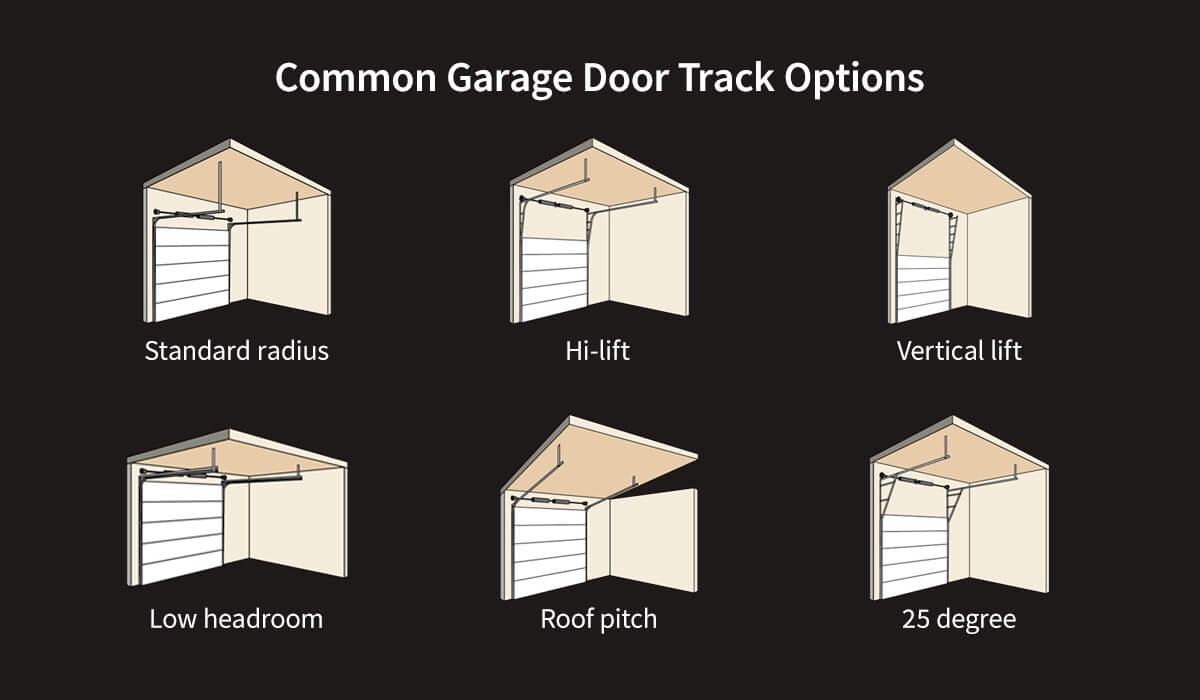
Now, picture having a toolbox just for this situation. Inside are your track options: standard, high-lift, vertical lift, and low headroom. You select the right tool for the job—the Low-Headroom (Dual-Track) system. This sets the door tighter to the ceiling, which means you can keep the full-view glass door your client wants.
Problem, solved!
This guide details each track option and its specific clearance requirements. It’s everything you need to design without compromise, maximize usable space, and confidently showcase your expertise.
Key Takeaways
- • Track as a Design Tool: The garage door track system is a versatile component that can be changed to accommodate specific door styles in spaces with architectural limitations.
- • Measure First, Specify Later: Before choosing a door, you must take three critical measurements: Headroom (space above), Sideroom (space to the sides), and Backroom (clear depth).
- • Match the Track to the Space: A variety of track systems are available to solve common architectural challenges, including Low Headroom, High Lift, and Follow Roof Pitch options.
- • Gauge Matters for Performance: The track's width (gauge) is critical for longevity. While 2-inch is standard for residential, heavier doors require a more robust 3-inch track.
How to Measure for Garage Door Clearance in 3 Steps
Before choosing a track system, you’ll need to measure for headroom, sideroom, and backroom.
Step 1: Measure Headroom
Headroom is the clear, unobstructed space from the top of the door opening. This space will accommodate components (tracks, springs, and opener). It also needs to account for the track radius, a curved piece of track section that ensures smooth operation.
- Standard Method: Measure from the top of the finished door frame straight up to the lowest obstruction (this could be the ceiling itself, but is often a pipe, light fixture, or beam). This number is your true headroom.
Tip: If you have multiple obstructions, always measure to the one closest to the door, as the door may not operate unless that obstacle is removed.
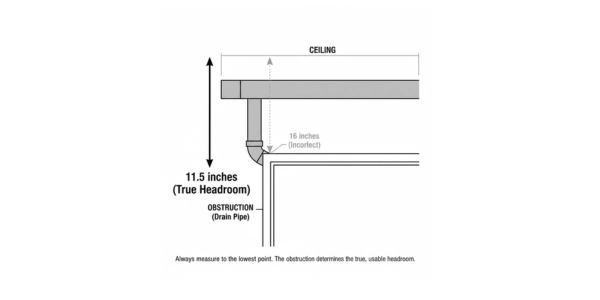
- Alternative for High Ceilings: If the ceiling is too high, measure from the floor to the lowest obstruction, then subtract the planned door height.
Step 2: Measure Sideroom
Measure horizontally from the edge of the door jamb to the nearest wall or obstruction on each side. Most systems require a minimum of 4.5", but some may need 6" or more.
Step 3: Measure Backroom
This is often the most overlooked measurement. Backroom is the clear depth required from the garage door opening back to the rear of the garage. This space is needed for the horizontal tracks and the opener.
Measure from the garage door opening/wall back to the first obstruction at the rear of the garage.
A Guide to Garage Door Track Options and Clearance Requirements
Now that you have your measurements, it’s time to choose a track!
Your headroom , backroom, and sideroom measurements are the primary factor in determining your track options. From there, consider the room's architecture—like a pitched roof—and the intended use of the space, to select the system that best aligns with your design goals. To make your decision easier, the chart below breaks down each track system by its clearance requirements, typical application, and considerations.
By selecting the right track system, your garage door will not only fit the opening, but you’ll also achieve a unified and functional design.
A Note on Track Gauge
Track gauge is the width of the track. While gauge seems like a small detail, it’s detrimental to the entire system's structural integrity, operation, and longevity. Your track width is determined by the size of the door and its weight. Residential projects generally use a 2-inch track, perfect for a single or double-car garage. Heavy-duty custom or wind-load doors will have a heavy-duty 3-inch track. This track is more robust, so it can handle larger doors in commercial or industrial environments that see high-cycle use. You’ll usually see a lightweight 1-inch track on smaller doors like semi-trailers or small specialty doors.
Architect Tools for Selection and Specification

Now that you have your measurements and track requirements, you’re ready to move forward with your design! Use our dedicated architect resources to finalize your project:
- Find the Right Door: Use our Product Selector Tool to filter through styles and options that match your project's needs.
- Generate Your Drawings: Once you have a door model, create custom drawings with our Drawing Generator.
- Get the Specs: Download detailed product specifications for your construction documents.
Your Partner in Design and Specification
From initial concept to final specification, our Architectural Design Support Team (ADS) is here for you. We partner with architects to streamline the entire process, delivering custom technical drawings, ensuring code compliance, and providing custom overhead door solutions for your most complex projects.